Kanmon Strait Fireworks Festival 2026
Last updated: September 6, 2026. All facts below are compiled from official festival, city and tourism association websites (linked at the end of this page).
Kanmon Strait Fireworks Festival 2026 is a Japanese fireworks festival (hanabi taikai) held on August 13, 2026 (Thu) in Shimonoseki / Kitakyushu (Moji Ward), Yamaguchi.
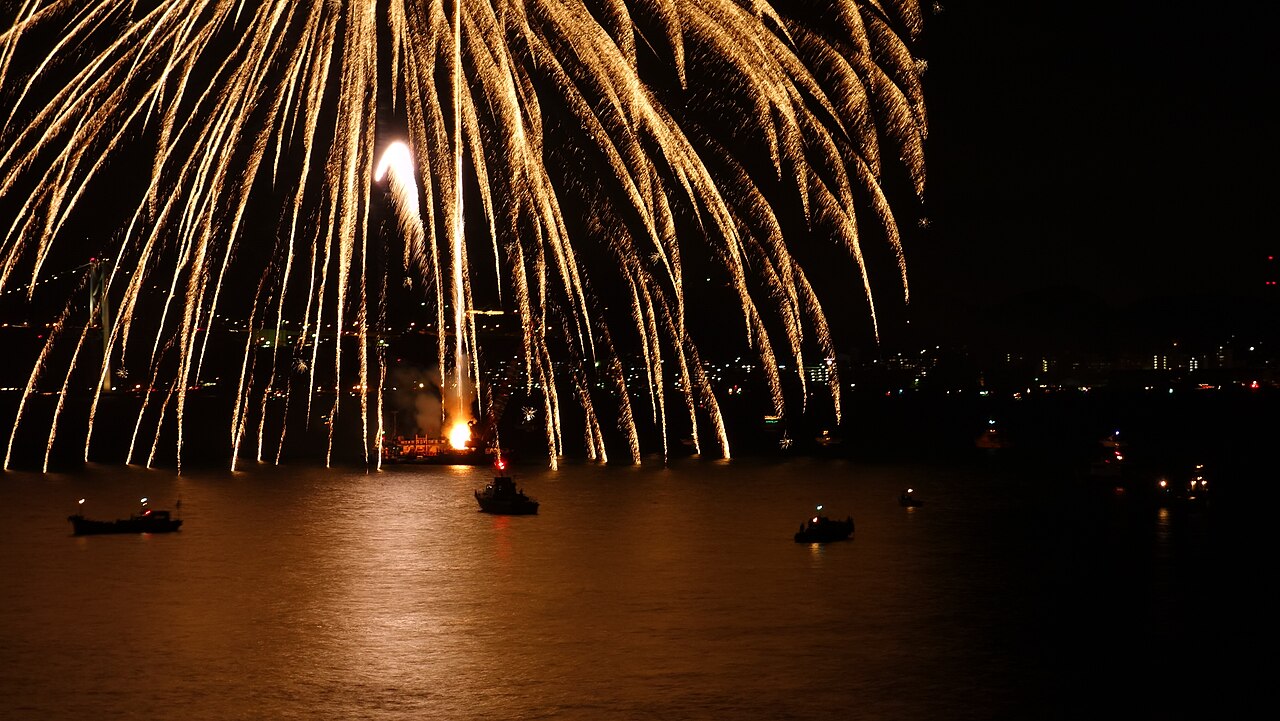
The festival began in 1985 as an Obon homecoming fireworks event organized by the Shimonoseki 21st Century Association on the Yamaguchi side; in 1988 Moji joined in as part of the 'Asia Port Festival in KANMON', and it has been held simultaneously from both shores ever since - 2026 marks the 42nd Asia Port Festival and the 39th joint fireworks display.
Key Facts
| Date | August 13, 2026 (Thu) — Officially confirmed |
|---|---|
| Time | 19:20-20:45 |
| Venue | Both shores of the Kanmon Strait: Arcaport waterfront area (Shimonoseki side) and Mojiko Retro waterfront (Moji side) |
| Nearest station | JR Shimonoseki Station (Shimonoseki side) / JR Mojiko Station (Moji side) |
| Fireworks | 18,000 |
| Admission | Moji side: all waterfront viewing areas require paid sponsorship tickets (sales from early July via Seven Ticket). Shimonoseki side: paid reserved seats available |
| Official site | https://www.kanmon-hanabi.love/ |
Highlights
- Roughly 18,000 fireworks (about 10,500 from Shimonoseki and 7,500 from Moji) are launched from both shores of the 700 m-wide strait facing each other - the only fireworks festival in Japan held jointly across a prefectural border under a single name, and one of western Japan's largest.
- The Shimonoseki side fires a rapid-fire sequence of 40 large shaku-dama (30 cm) shells plus fireworks that burst directly on the water's surface, all mirrored on the sea between the two cities.
- The 2026 program opens with a ceremony at 19:35 and a show of around 800-900 illuminated drones at about 19:45, before the synchronized fireworks begin at 20:00 (ending around 20:30-20:50).
- The backdrop combines the illuminated Kanmon Bridge, passing ships, and the gaslit Mojiko Retro historic port district.
Where to Watch
Mojiko Retro / Nishikaigan Waterfront (Moji Venue) (Paid seating)
The main Kitakyushu-side venue spreads along the retro harbor district's waterfront, directly facing the launch barges in the strait. The entire shoreline is ticketed, ranging from a low-cost 'environmental cooperation area' (about JPY 1,100 in advance) to reserved chairs, tables and tatami platforms; there is no free viewing zone around the venue.
About 10 minutes on foot from JR Mojiko Station (terminus of the JR Kagoshima Line branch from Kokura).
Arukaport & Misakinocho Pier (Shimonoseki Venue) (Paid seating)
The core Shimonoseki-side area next to the Kaikyokan aquarium and Kaikyo Yume Tower, closest to the Shimonoseki launch site and home to the premium, box and VIP seating. Entry requires a cooperation-fee ticket (around JPY 3,000 for general admission in 2026); gates open mid-afternoon.
About 15-20 minutes on foot or a short bus ride from JR Shimonoseki Station.
Karato Market / Kamon Wharf Area (Shimonoseki Venue) (Paid seating)
The waterfront promenade in front of the famous Karato fish market and the Kamon Wharf shopping complex offers wide views across the strait toward Moji. In 2026 entry to these zones costs about JPY 2,000 per adult (JPY 1,000 for elementary-school children), with gates opening around 17:00.
About 5 minutes by bus from JR Shimonoseki Station to the Karato area, then a 1-minute walk; roughly 20 minutes on foot from the station.
Hinoyama Park (Shimonoseki side, distant view) (Free)
A free city park on a 268 m hill above the strait, registered as a Japan Night View Heritage site, from which both cities' fireworks can be seen at a distance. Note that the Hinoyama Ropeway is out of service until a new system opens in 2027, so in 2026 you must reach the summit by road or on foot, and the spot has become crowded in recent years - arrive well before sunset.
Uphill from Mimosusogawa bus stop (bus from JR Shimonoseki Station); no ropeway service in 2026.
Mekari Park / Norfolk Square (Moji side, distant view) (Free)
A hillside park at the northern tip of Moji beneath the Kanmon Bridge, whose observation areas overlook the strait away from the ticketed zones. It is a popular unofficial spot rather than a designated viewing area, so facilities are limited and access roads may be congested or restricted on the night.
About 40-50 minutes on foot from JR Mojiko Station or by bus toward Mekari; near the Moji entrance of the Kanmon pedestrian tunnel.
How to Buy Tickets
Each shore sells its own tickets. Shimonoseki-venue tickets went on general sale on 6 June 2026 (10:00 JST) through the official Rakuten Ticket fireworks page, with payment/pickup via 7-Eleven or FamilyMart and a limit of 8 tickets per person; Lawson Ticket also lists the event. Moji-venue tickets are handled from early July via Seven Ticket and 7-Eleven store terminals, with details posted on the official kanmon-hanabi.love site; popular seat categories sell out well before the day.
- Platforms: Rakuten Ticket (r-hanabi.tstar.jp), Lawson Ticket, Seven Ticket / 7-Eleven store terminals
- Price range: Entry 'cooperation fee' areas from about JPY 1,100-3,000 per adult (JPY 2,000 same-day cash on the Moji side); individual chairs JPY 5,500-10,000; group tatami/table seats roughly JPY 25,000-80,000; VIP sofa sets on the Shimonoseki side up to JPY 300,000 for 5 people.
- Sales start: 2026-06-06
- English purchase: Japanese only (consider a proxy service or asking your hotel)
Getting There
For the Moji venue, take the JR Kagoshima Line to Mojiko Station (about 15 minutes from Kokura, with trains running roughly every 5 minutes on festival evening) and walk about 10 minutes; from Hakata, Kokura is about 15 minutes by shinkansen or 40-50 minutes by rapid train, so allow roughly an hour door-to-door. For the Shimonoseki venue, JR Shimonoseki Station (Sanyo Line, or via Shin-Shimonoseki shinkansen station) is a 15-20 minute walk or short bus ride from the Karato/Arukaport waterfront. There is no event parking and roads around both venues are closed to traffic, so public transport is essentially mandatory.
Crowd & Timing Tips
- Arrive by 16:00-17:00 at the latest; on the Moji side, entry restrictions around Mojiko Station and the venue have started as early as 18:30 in recent years.
- Trains after the finale are extremely packed - expect long queues at Mojiko and Shimonoseki stations, and consider lingering an hour at a restaurant or the retro district before heading back.
- Buy tickets in advance: there are no free viewing areas around either venue, and same-day cash entry (Moji side, JPY 2,000) means long lines.
- Do not drive - there is no event parking and roadblocks surround both venues; if you must, use park-and-ride from stations further out.
- The Kanmon pedestrian tunnel linking the two shores stayed open on festival day in recent years, but it is far from both main venues and gets crowded, so do not rely on it to switch sides right before the show.
Weather Policy
The festival goes ahead in rain but is cancelled without postponement in severe weather such as strong winds, with a final go/no-go decision announced on the afternoon of the day (around 14:00-15:00); tickets are not refunded if the event is cancelled.
Frequently Asked Questions
When exactly do the fireworks start and end?
On 13 August 2026 the opening ceremony starts at 19:35, a drone show follows around 19:45, and the fireworks themselves run from 20:00 to roughly 20:30-20:50 on both shores. Check the official sites shortly before the day, as the program can be adjusted.
Can I watch for free?
Not near the venues - in recent years the entire waterfront on both sides has been ticketed, with even the cheapest 'cooperation fee' areas costing about JPY 1,100-3,000. Free viewing is only possible from distant unofficial spots such as Hinoyama Park (Shimonoseki) or Mekari Park (Moji), which fill up early.
Can I buy tickets in English?
The official sales channels (Rakuten Ticket, Lawson Ticket, Seven Ticket and convenience-store terminals) operate in Japanese only, so ask a Japanese-speaking friend or your hotel for help, or use a browser translator. Cheaper same-day entry on the Moji side can be paid in cash at the gate if capacity remains.
Which side should I choose, Moji or Shimonoseki?
Both see the full cross-strait show. Moji offers the photogenic Mojiko Retro backdrop and easier access from Fukuoka/Hakata via Kokura; Shimonoseki has the larger launch program (about 10,500 shells), the premium seating, and the Karato market food stalls. Switching sides on the night is impractical due to crowds.
How do I get there from Fukuoka City?
Take the shinkansen (about 15 minutes) or a JR rapid train (40-50 minutes) from Hakata to Kokura, then the local JR line to Mojiko Station (about 15 minutes; extra trains run every few minutes on the day). For the Shimonoseki side, continue from Kokura across the strait to JR Shimonoseki Station. Allow at least an hour each way and expect very crowded return trains.
What happens if it rains?
The show goes ahead in ordinary rain; it is cancelled outright (not postponed) only in severe weather such as strong wind, decided on the afternoon of the day, and tickets are not refunded in that case.
See more fireworks in the area: Yamaguchi Fireworks Festivals 2026 · Japan Fireworks Calendar 2026
Sources
- https://www.kanmon-hanabi.love/
- https://www.kanmon-hanabi.love/services-1
- https://r-hanabi.tstar.jp/kanmonkaikyohanabi/
- https://yamaguchi-tourism.jp/event/detail_10449.html
- https://yamaguchi-tourism.jp/feature/kanmonhanabi
- https://www.crossroadfukuoka.jp/feature/kanmonhanabi
- https://shimonoseki.travel/post-2964/